Preserving Art and Objects for Future Generations: Professional Digitisation for Heritage Institutions
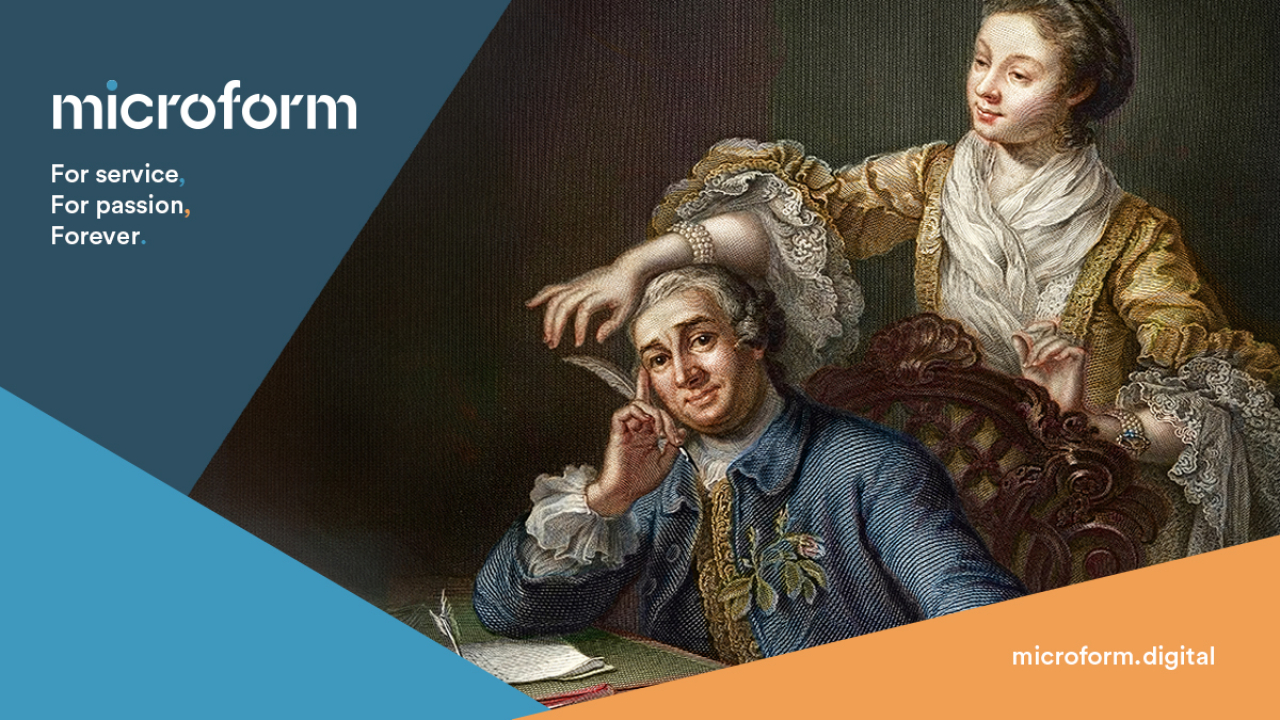
Heritage institutions carry a responsibility that extends far beyond the present moment. The collections in your care belong not only to today's visitors but to generations who have not yet had the chance to encounter them. Professional digitisation is one of the most consequential steps an institution can take to honour that responsibility, creating faithful, enduring records of works that are, in many cases, irreplaceable.
Your role is to safeguard, not just display.
The Responsibility of Heritage Institutions
Cultural collections represent something that cannot be recreated once lost. Whether your institution holds fine art, decorative objects, archival material, or community heritage, the works in your care carry histories, meanings, and connections that exist nowhere else. Public trust (the foundation on which grant funding and community engagement both depend) rests in large part on how seriously an institution takes its custodial duties.
Long-term preservation has always been central to that duty. Conservation practice, environmental controls, handling protocols: these are the physical disciplines of stewardship. Digital preservation is their modern counterpart, and it is no longer optional. An institution without high-quality digital records of its collection is one unexpected event away from an irreversible loss.
The Risks Facing Physical Collections
Even under careful management, physical objects are vulnerable in ways that accumulate gradually and become visible only when it is too late.
Light exposure degrades pigments, fades works on paper, and weakens textile fibres over time, even at levels considered safe for display. Every handling event, however well-managed, introduces some risk of abrasion, cracking, or accidental damage, particularly for fragile or aged materials. Environmental fluctuations (humidity, temperature, atmospheric pollutants) cause slow, cumulative deterioration that conservation treatment can slow but rarely reverse. And against catastrophic risks such as fire, flood, or structural failure, no physical measure offers complete protection.
A comprehensive digital record does not replace a lost object, but it preserves a level of knowledge about that object that would otherwise be gone entirely. For objects that survive but are damaged, high-resolution pre-damage records become invaluable tools for conservation and restoration work.
Professional 2D Fine Art Digitisation
Two-dimensional works present a range of capture challenges that consumer equipment simply cannot meet to the standard archival preservation requires.
Paintings (particularly large-format or thickly worked pieces) demand capture that is faithful to surface quality as well as colour, recording the physical character of the work rather than merely its composition. Works on paper, whether drawings, prints, watercolours, or documents, require careful attention to tonal range and the subtleties of media on ground. Textiles present particular challenges: weave structure, pile, sheen, and dimensional quality are easily lost in inadequate capture. And for genuinely fragile materials (brittle paper, flaking paint, unstable surfaces) non-invasive capture methods are not a preference but a necessity.
Our 2D digitisation service is calibrated to meet these demands across the full range of two-dimensional material a heritage collection is likely to include.
3D Object Digitisation
For sculpture, ceramics, artefacts, and relief works, a single flat image is an inadequate record. Form, scale, surface texture, and spatial complexity are all part of what makes a three-dimensional object what it is, and all of them are lost or distorted in conventional photography.
Our 3D digitisation captures objects in the round, producing records that convey accurate scale, surface quality, and spatial relationships. For sculpture, this means the presence and mass of a work are properly represented. For ceramics, glaze character and form are recorded faithfully. For artefacts (particularly those of archaeological or ethnographic significance) detailed capture preserves evidence that may be directly relevant to ongoing or future scholarship. Relief works and mixed media pieces, which occupy an ambiguous space between two and three dimensions, are handled with the care their complexity requires.
Creating Archival-Quality Digital Masters
The value of a digitisation programme is determined by the quality of the files it produces. An archival master is not simply a large image: it is a precisely calibrated record, created to standards that ensure its usefulness not just today but across the decades and technological changes to come.
Colour calibration, conducted against physical reference standards, ensures that the digital record reflects the actual colour of the work rather than the characteristics of the capture equipment. Non-invasive capture methods mean that no object is placed at risk in the process of being recorded. Master files are produced at resolutions that support both detailed scholarly examination and high-quality reproduction. And preservation-grade formats (those with open specifications, wide software support, and long-term stability) ensure that files remain accessible as technology evolves.
Supporting Long-Term Digital Preservation
A digital file without context is of limited use. Archival-quality masters must be accompanied by structured, consistent metadata if they are to serve the institution's long-term needs.
We deliver files with embedded and accompanying metadata that covers artist or maker, title, date, medium, dimensions, acquisition information, and any further fields relevant to your cataloguing standards. Consistent file naming conventions ensure that records integrate cleanly with existing collection management systems. And we are glad to advise on storage strategy, including the principles of redundancy, geographical distribution, and format migration that underpin responsible long-term digital preservation.
The goal is not simply to produce good files. It is to ensure that those files remain findable, interpretable, and usable by the people who will need them in ten, thirty, or a hundred years' time.
Onsite and Offsite: Adapting to Your Collection's Needs
Many heritage objects cannot, and should not, be moved. Our team is fully equipped to work onsite at your institution, bringing professional lighting, calibration equipment, and capture systems to you. For objects where transportation is appropriate, we manage secure logistics to bring works to our studio, where the controlled environment supports the highest-quality capture.
Both approaches deliver the same archival standard. We will always recommend the option that best protects the objects in your care.
Discuss Your Collection Digitisation Strategy
Every collection is different, and a digitisation programme should reflect the specific priorities, risks, and resources of the institution undertaking it. We work with heritage institutions at every stage, from initial scoping and prioritisation through to delivery and integration with existing systems.
If you would like to discuss how a digitisation programme might be structured for your collection, we would welcome the conversation. Get in touch to arrange a consultation with our team.
Your collection has been entrusted to you. Let's make sure it is protected for those who come after.